Pictures of Mantises
 |
 |
 |
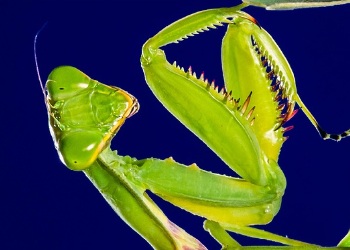 |
Praying mantises are the common name for the order of insects Mantodea, which was given to them because all species share the same raptorial forelegs. name mantodea comes from Ancient Greek words meaning "prophet" and "for." They’re in the superorder Dictyoptera along with termites and cockroaches, with whom they were formerly classified as Orthoptera. The name mantodea comes from Ancient Greek words meaning "prophet" and "for." Their earliest connotations in stories were courage and fearlessness. The habit of mantises to stay perfectly still to wait for its prey led them to be associated with wisdom and patience, along with sometimes being mistaken for stick insects.
Mantises are the only insect that can turn their heads and that, along with their large eyes, make them suited towards the ambush predation they usually employ. Some species even camouflage themselves to hunt, such as orchid mantises and devil’s flower mantises. They primarily hunt smaller arthropods, but will also predate small vertebrates like lizards and frogs and engage in cannibalism. Though they’re well known for sexual cannibalism, this is misleading as they’re opportunistic predators, making any animal small and within reach a target. This type of cannibalism is primarily observed in captivity and among females with poor diets. In nature, it’s more common to see hatchling Mantodea eat each other upon emerging from the egg sack.
|
|
|
|